
This is part 3 of the “The past, present, and future of Salesforce document management and its impact on your business” series.
The first two articles in this series laid the groundwork for understanding the challenges and solutions in Salesforce document management. In Part 1, we explored the hidden inefficiencies of disorganized file systems and the limitations of Salesforce Files, highlighting the obstacles they pose to productivity, collaboration, and compliance. Part 2 introduced Cartularius, a revolutionary solution that transforms document management with seamless Salesforce integration, powerful workflows, and enhanced security.
But what comes next? As businesses plan for the future, the role of AI in document management is becoming increasingly apparent. From automating routine tasks to revealing actionable insights, AI has the potential to revolutionize how teams interact with their documents and data. The evolution of document management is no longer about tackling yesterday’s challenges—it’s about preparing for tomorrow’s opportunities.
In this final installment, we’ll explore how AI-driven workflows are poised to transform document management. From intelligent categorization and predictive analytics to automated compliance and enhanced collaboration, we’ll demonstrate how Cartularius is designed to help your business take advantage of these cutting-edge innovations. By the end of this article, you’ll have a clear understanding of how AI can enhance your Salesforce ecosystem and why Cartularius is vital for staying ahead in this rapidly evolving landscape.
Join us as we delve into the future of document management—one powered by AI, crafted for innovation, and ready to unlock your business’s full potential.
Managing documents in today’s data-driven world is complex. Businesses must contend with growing volumes of unstructured data stored in documents, emails, and scanned records alongside structured data in platforms like Salesforce, Snowflake, or Data Cloud. While structured data is relatively easy to analyze and integrate into workflows, unstructured data remains underutilized and siloed. This divide creates inefficiencies, inconsistencies, and missed opportunities in workflows, compliance, and decision-making.
Artificial intelligence (AI) has emerged as the key to unlocking the potential of unstructured data, transforming document management from a labor-intensive and error-prone process into a seamless, efficient, and highly integrated workflow. By addressing the limitations of human-led document management, AI reshapes how businesses organize, access, and utilize their data.
Traditional document management depends largely on manual processes, which create considerable inefficiencies and risks.
Manual Categorization
Sorting, tagging, and organizing documents require time-consuming human effort, often leading to inconsistent practices, misfiled documents, and a lack of standardization that hampers collaboration and retrieval.
Inefficient Document Retrieval
Employees spend hours searching for documents that are scattered across various systems, folders, and personal workspaces. This inefficiency leads to wasted time, disrupts workflows, and hinders crucial decision-making.
Compliance Tracking Gaps
Ensuring that documents comply with industry standards or internal policies necessitates careful monitoring and auditing. Manual tracking is frequently incomplete and prone to errors, resulting in compliance risks and challenges during audits.
These limitations result in bottlenecks throughout operations, decreasing productivity and raising the chances of missed deadlines, errors, and regulatory violations.
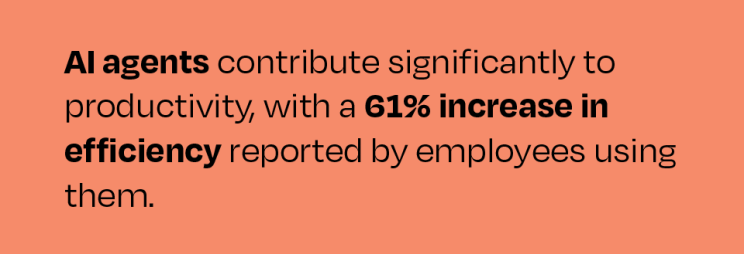
AI signifies a paradigm shift in document management, tackling these challenges in ways that human effort cannot match. By utilizing advanced machine learning and natural language processing (NLP), AI provides:
1. Automation of Repetitive Tasks
AI can automatically categorize, tag, and organize documents based on their content and context. For instance, it can identify contracts, invoices, or agreements and assign them to the appropriate Salesforce records without any manual intervention.
2. Predictive Insights
AI allows businesses to proactively identify trends, anticipate needs, and automate actions. For instance, it can flag contracts nearing expiration or recommend relevant documents during customer interactions, enabling teams to stay ahead of important tasks.
3. Intelligent Interactions
Large language models (LLMs) such as GPT are changing the way users interact with documents. Instead of browsing through folders, users can pose questions to an AI agent like, “What are the payment terms in this contract?” and get instant, accurate responses. This dynamic interaction makes document management quicker, smarter, and more intuitive.
One of the biggest challenges businesses face is bridging the gap between structured data stored in platforms like Salesforce and unstructured data trapped in documents. AI helps by transforming unstructured information into actionable insights.
For example:
This integration improves data quality and creates a unified, reliable system of record, positioning businesses for better decision-making and operational efficiency.
AI elevates document management from mere static storage to an active, integrated part of business workflows. Examples include:
1. Workflow Automation
AI can initiate actions based on document content. For example, if an AI detects an unsigned contract, it can automatically send reminders, update opportunity stages in Salesforce, or route the document for approval.
2. AI as a Decision Partner
During a conversation, an AI agent can retrieve relevant documents, analyze their content, and recommend next-best actions. This enables teams to make data-driven decisions in real-time, boosting efficiency and customer satisfaction.

AI’s role in document management goes beyond addressing today’s challenges; it prepares us for the future. By automating workflows, enhancing data quality, and facilitating intelligent interactions, AI enables businesses to function with unparalleled efficiency and agility. As unstructured data becomes as actionable as structured data, organizations can uncover new opportunities and achieve a competitive advantage.
After exploring the transformative role of AI, we now shift our attention to the key innovations propelling this change. From intelligent categorization to predictive workflows, these innovations are redefining what is possible in document management. Let’s delve into the technologies shaping the future.
Artificial intelligence (AI) is revolutionizing document management, taking it from a time-consuming and manual process to an automated, intelligent, and deeply integrated part of business operations. Building on AI’s foundational role, businesses can now leverage cutting-edge innovations that redefine how documents are organized, retrieved, analyzed, and acted upon. Let’s explore the key AI-driven innovations reshaping the document management landscape.
Traditional file systems often require users to manually organize documents into folder hierarchies that reflect their individual or team workflows. Although this method offers flexibility, it frequently leads to inconsistent organization, making it challenging for others to navigate or retrieve files effectively. Document management systems have attempted to resolve this issue by implementing categories or tags, but these systems still rely heavily on manual input, which can be time-consuming, inconsistent, and susceptible to error.
AI transforms this process through intelligent categorization, automating document organization by analyzing their content, context, and metadata.
AI automates categorization and storage, ensuring documents are consistently and accurately organized. This innovation not only saves time but also reduces the risk of misfiled or lost documents, making it easier for teams to locate and use the information they need with minimal effort.

Finding the right document at the right time is still one of the most significant challenges in document management. Traditional search functions, which depend on keywords or limited metadata, frequently frustrate users and waste valuable time. AI transforms this process with intelligent search capabilities that comprehend context, intent, and even natural language queries.
By removing the inefficiencies of manual searching, AI enables employees to quickly find the documents they require. This innovation not only increases productivity but also builds user confidence by delivering fast, accurate, and contextually relevant results tailored to their workflows.
AI’s capability to analyze patterns and anticipate outcomes introduces a proactive method to document management via predictive workflows. This advancement enables businesses to automate repetitive tasks and tackle potential issues before they occur.
By automating these processes, AI minimizes manual effort, boosts efficiency, and ensures that no critical tasks are missed.
A large part of an organization’s data exists in unstructured formats within documents. Traditional systems find it challenging to make this data actionable, but AI transforms the landscape by extracting and integrating data from unstructured sources into structured workflows.
This innovation improves data quality, guarantees consistency across systems, and establishes a foundation for better decision-making.
Compliance is a vital issue for companies, especially in highly regulated sectors like finance, healthcare, and legal services. AI enhances compliance management through automated tracking and tools for audit preparedness.
This innovation reduces the manual effort required for compliance and gives businesses peace of mind about meeting regulatory standards.
AI does more than manage documents—it also generates actionable insights from them. AI examines document metadata, content, and usage patterns to provide data-driven insights that help businesses optimize their operations.
These insights enable businesses to consistently enhance their operations and bolster decision-making.
AI-driven collaboration tools enhance teamwork by facilitating real-time document editing, sharing, and discussion. AI agents also assist users by handling mundane tasks, allowing for higher-level strategic work.
AI agents improve collaboration, freeing employees from manual tasks and allowing them to focus on strategic oversight and creative problem-solving.
As AI assumes responsibility for repetitive tasks, human users transition from doers to managers of AI-driven workflows. AI agents manage the labor-intensive work—such as document categorization, compliance tracking, and workflow automation—while users supervise and enhance these processes.
This innovation redefines roles, allowing employees to enhance productivity and focus on higher-value contributions.
AI-driven innovations have already transformed how organizations approach document management, bridging gaps between unstructured and structured data, automating workflows, and enabling real-time collaboration. However, AI’s true potential lies in its ability to evolve continuously. It can take on increasingly complex tasks to streamline operations and unlock new opportunities for efficiency and growth.
With tools like Cartularius, businesses are not only tackling today’s challenges but also getting ready to fully embrace an AI-driven future. By integrating AI-powered features such as smart categorization, predictive workflows, and intelligent search, Cartularius establishes the groundwork for the next phase of document management innovation. However, this is just the beginning. Let’s delve into how Cartularius empowers businesses to adopt AI today while preparing for tomorrow’s advancements.
Cartularius is more than just a document management tool—it is a platform designed to leverage AI to its fullest potential, both now and in the future. By combining practical AI functionalities with a vision for continuous evolution, Cartularius ensures businesses are ready to lead in an AI-driven world.
1. Smart Categorization and Folder Automation
Cartularius has already implemented AI-driven functionality for basic document analysis, enabling files to be automatically categorized and stored in the proper folder within a Salesforce record. For example:
2. Contextual Document Summaries
To enhance searchability, Cartularius includes document summarization functionality. This functionality analyzes the content of a file and generates a concise summary. The summary provides context for text-based searches, allowing users to retrieve documents faster and with greater accuracy.
These capabilities are only the start of how Cartularius is using AI to streamline and improve document management workflows.
Cartularius is dedicated to advancing AI integration, aiming to enhance its capabilities and facilitate fully automated, intelligent workflows. Here’s a glimpse of what the future holds:
1. AgentForce Integration for Basic Actions
Cartularius is testing AgentForce, an AI-powered assistant designed to manage common document-related tasks. For instance:
2. End-to-end Document Categorization and Storage Automation
The next step involves advancing document analysis by allowing Cartularius to automatically:
3. Enhanced AgentForce Capabilities
Future enhancements to AgentForce seek to manage increasingly complex tasks and facilitate conversational, hands-free document management. Envision scenarios such as:
4. Dynamic Workflows and Predictive Task Management
As AI evolves, Cartularius will incorporate predictive capabilities to anticipate user needs, including:
5. Reducing Human Labor for Repetitive Tasks
By continuously enhancing its AI capabilities, Cartularius aims to eliminate repetitive and mundane tasks from employees’ workloads entirely. This will enable users to concentrate on higher-value activities, such as strategy, decision-making, and innovation, while delegating the “hard labor” to AI.
This journey is just beginning, and Cartularius is dedicated to discovering new ways AI can make work easier, more productive, and more enjoyable. As the platform evolves, businesses that adopt Cartularius will not only be prepared for today’s challenges but also positioned to excel in the AI-driven future ahead.
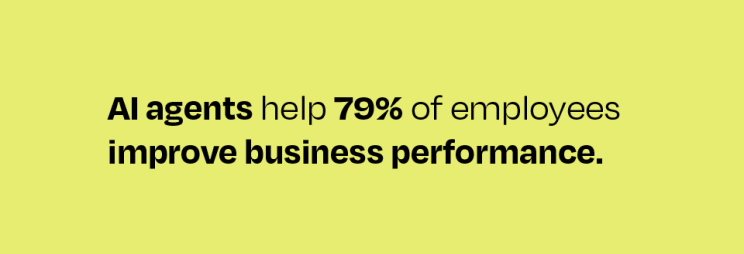
As we’ve explored in this series, document management is evolving from the disorganized systems of the past to AI-powered solutions that are shaping the future. With Cartularius, businesses can move beyond the limitations of manual workflows and fragmented file systems to embrace a truly integrated, intelligent, and future-proof document management solution.
Cartularius offers powerful tools that tackle your document management challenges and deliver genuine business value:
By implementing these capabilities, Cartularius enables your business to:
With Cartularius, you’re not only addressing today’s challenges—you’re positioning your business for long-term success in a competitive, AI-driven landscape.
At Upper Spire, we’re not just building tools—we’re shaping the future of business. We’re eager to embrace AI and its transformative potential, and we invite you to join us on this journey. Together, we can redefine document management, unlock new efficiencies, and empower your business to thrive in an AI-driven future.
Now is the time to act. Let’s create the future together.
Install Cartularius now and experience the best Salesforce document management solution and enjoy clean and structured data and optimized processes, risk-free for 30 days.